ARTICLE SUMMARY
Supplier management automation connects and standardizes supplier-related workflows—such as onboarding, qualification, performance tracking, and risk control—through a centralized and auditable process that enhances procurement visibility, ensures compliance, and supports end-to-end process orchestration.

Companies working with dozens or even hundreds of suppliers often face a silent yet critical challenge: fragmented vendor management. When control relies on spreadsheets or disconnected systems, visibility into risks, performance, and key procurement processes is limited. As part of broader process orchestration efforts, supplier management automation connects every stage of the supplier lifecycle in a digital, auditable, and efficient flow.
With this approach, companies can automate everything from onboarding to performance tracking and compliance monitoring. The result? Lower risks, faster execution, and data-driven decisions.
What is supplier management automation?
Supplier management automation refers to using technology to streamline and automate vendor-related processes,such as registration, qualification, performance reviews, and contract renewal. It eliminates repetitive tasks, consolidates data from multiple sources, and ensures full traceability of supplier interactions.
Unlike generic ERP modules or manual workflows, a robust automated supplier management solution offers validation rules, customizable workflows, integrations with external databases (e.g., tax status, sanction lists), and real-time dashboards.
Which stages of the supplier lifecycle can be automated?
Much of the supplier lifecycle management process can be automated, delivering immediate impact to procurement, compliance, and finance teams. Here are some common stages:
| Stage | Automation possibilities |
| Vendor request | Digital forms with validation rules and sequential approvals |
| Onboarding | Automated checklists, tax validation, and bank account confirmation |
| Contracting | Document generation based on templates and e-signature integration |
| Performance evaluation | Automated feedback collection, KPI tracking, and alerts |
| Requalification & renewal | Revalidation workflows with auto-approval for updated documentation |
Even lean teams can automate these steps using no-code/low-code platforms like Pipefy.

What are the main benefits of automating supplier management?
The impact of supplier management automation goes far beyond productivity. It directly improves decision quality, regulatory compliance, and supplier relationships.
- Fewer manual errors: Reduces rework and incorrect entries in critical data fields.
- Built-in compliance: Ensures mandatory documentation and requirements are verified.
- Real-time visibility: Dashboards show onboarding status, missing documents, and risk alerts.
- Procurement integration: Improves workflow from supplier approval to purchasing requests.
- Performance tracking: Custom KPIs to evaluate service level and compliance.
Organizations that adopt supplier automation typically report faster cycle times, better risk mitigation, and improved collaboration across departments.
- Explore how other leaders are automating workflows with no-code tools and AI Agents

How does automation help reduce risks (compliance, fraud)?
Relying on manual processes to validate documentation, approve suppliers, or audit deliveries exposes organizations to significant risk. With vendor management automation, companies mitigate those risks with structured safeguards.
- Regulatory compliance: Enforces mandatory uploads of licenses, certifications, and tax documents.
- Fraud prevention: Cross-validates banking and tax ID details to prevent unauthorized payments.
- Reputational protection: Integrates with restricted lists and automates compliance checks.
- Audit readiness: Centralized supplier history with version control and activity logs.
For example, a fintech using supplier onboarding automation can automatically block incomplete or unverified vendor submissions—preventing regulatory exposure and fines.
What are the first steps to implement automation in my company?
Adopting supplier management automation doesn’t require a full-scale digital transformation. Start small with high-impact areas and scale gradually based on outcomes.
For example, an insurance company might begin by automating the onboarding and verification of service providers—like repair shops and consultants—by integrating forms, business rules, and compliance validations. This shortens approval times and strengthens cost governance.
A consumer goods company, on the other hand, may start by automating supplier requalification workflows. Integrating performance KPIs with ERP and quality systems helps respond quickly to market shifts while maintaining vendor standards.
Here’s a typical path to get started:
- Map current processes: Identify bottlenecks and repetitive manual tasks.
- Prioritize critical stages: Onboarding, approvals, and evaluations are great starting points.
- Choose a scalable platform: Look for no-code/low-code tools that integrate with your stack.
- Engage stakeholders: Ensure alignment between procurement, compliance, and IT teams.
- Implement in short cycles: Start with MVPs and iterate quickly based on feedback.
This phased approach builds internal buy-in and accelerates time-to-value.
What features should I look for in a supplier management automation tool?
When evaluating supplier management automation platforms, focus on features that balance control, autonomy, and security:
- Customizable workflows with business logic
- Automated checklists per supplier type
- External data validation integrations
- Dashboards and reporting for KPIs and compliance tracking
- Access control and audit trails
- ERP and procurement tool integration
For instance, a financial services company benefits from real-time dashboards that flag compliance gaps, ensuring continuous oversight by internal audit teams. In insurance, AI Agents embedded in workflows can analyze documents and automatically alert fraud or non-compliance risks. And in consumer goods, integrations with ERPs ensure supplier master data stays synchronized—avoiding duplicated efforts and data errors.
Platforms like Pipefy offer these capabilities in a unified interface—empowering operations teams while maintaining governance for compliance and risk teams.
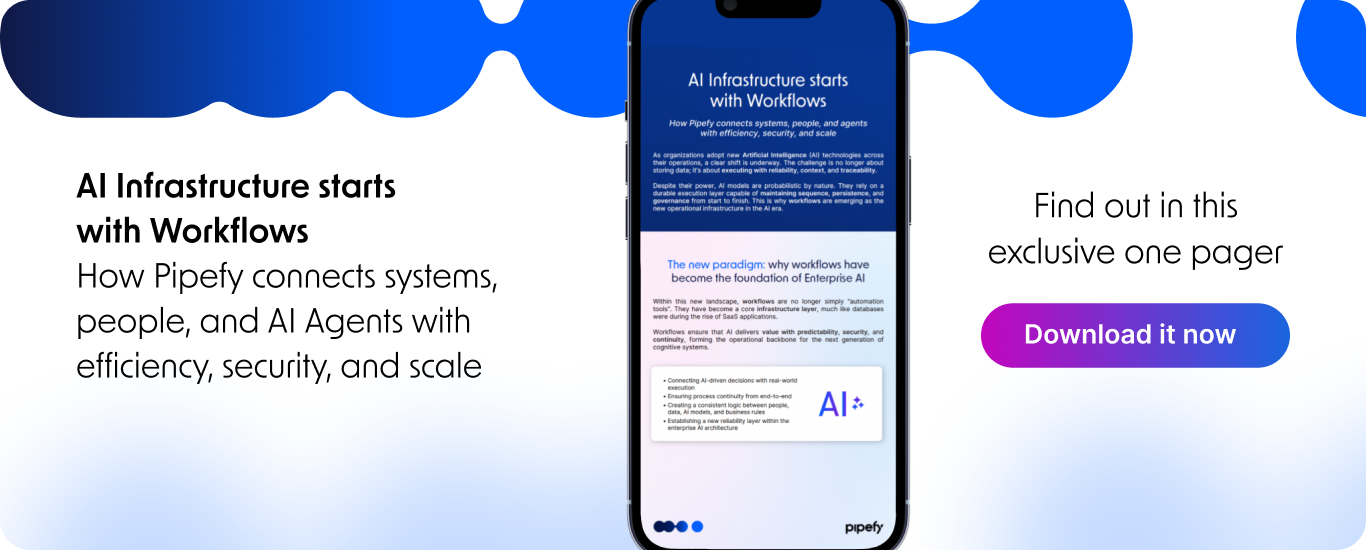
- Learn how companies connect systems, people, and compliance rules into auditable workflows using AI-powered infrastructure.
Pipefy as an AI Enabler for supplier management
Pipefy is a no-code/low-code platform that helps mid-sized and large enterprises digitalize complex workflows. In supplier management, it acts as an AI Enabler by embedding rules, automations, and AI Agents into end-to-end processes.
Leading companies in financial services, insurance, and consumer goods use Pipefy to:
- Digitize onboarding with AI document validation
- Track performance and trigger preventive actions based on data
- Reduce regulatory risks through audit-ready workflows
- Build approval flows based on vendor profile and service type
Click the button below to discover how your company can structure and scale supplier management automation with Pipefy.