ARTICLE SUMMARY
Cloud flexibility refers to the ability of cloud infrastructures to adapt dynamically to changing business needs, allowing organizations to scale, reallocate, and integrate resources across environments while maintaining control, compliance, and performance.

Cloud flexibility is a critical enabler for CIOs, CFOs, and Heads of Operations seeking agility and control in orchestrating workflow automation across large organizations. In industries like financial services, insurance, and consumer goods, the ability to quickly adapt infrastructure and processes to evolving business needs is a strategic differentiator.
What does “flexibility” mean in the context of cloud computing?
Cloud flexibility refers to the capacity of a cloud environment to dynamically adjust to workload demands without compromising performance, security, or cost-efficiency. It’s foundational for companies operating under regulatory constraints, seasonal cycles, or innovation pressures.
This flexibility takes different forms: from on-demand allocation of compute power (elastic computing) to deploying hybrid and multi-cloud strategies that align with each organization’s IT maturity and operational complexity.
What is the real difference between flexibility, scalability, and elasticity in the cloud?
Although often used interchangeably, these terms describe distinct concepts:
| Concept | Definition | Example |
| Flexibility | Ability to reconfigure infrastructure based on varying scenarios | Shifting compliance workflows to private cloud while keeping customer support in public |
| Scalability | Capacity to grow infrastructure over time to meet demand | Supporting more users and data without affecting performance |
| Elasticity | Automated, near-instant adjustment of resources based on real-time need | Increasing vCPU capacity during quarterly peak in approval requests |
Understanding these differences helps decision-makers align cloud strategies to both growth and responsiveness needs.

Why is cloud flexibility crucial for businesses today?
In practice, cloud flexibility enables organizations to respond faster to market shifts or regulatory changes. In high-compliance sectors like finance and insurance, where onboarding or credit analysis processes must adapt quickly to new rules, flexibility reduces response time without compromising governance.
Organizations that invest in adaptive cloud infrastructures are better positioned to support innovation and react quickly to business demands.
What are the main practical benefits of flexible cloud infrastructure?
Beyond agility, cloud flexibility brings measurable gains in three areas:
- Cost efficiency: Avoid overspending by dynamically adjusting resource usage.
- Innovation: Test and deploy new services without heavy infrastructure investment.
- Resilience: Distribute workloads across providers to ensure continuity and risk mitigation.
How can I achieve flexibility in my cloud architecture?
Pursuing cloud flexibility requires a strategic combination of technologies and governance. Key approaches include:
- Multi-cloud strategy: Allocate workloads across vendors to optimize for cost, performance, and regional compliance.
- Containers and Kubernetes: Increase portability and reduce vendor lock-in for business-critical applications.
- Serverless architecture: Automatically scale compute resources based on usage, minimizing idle costs.
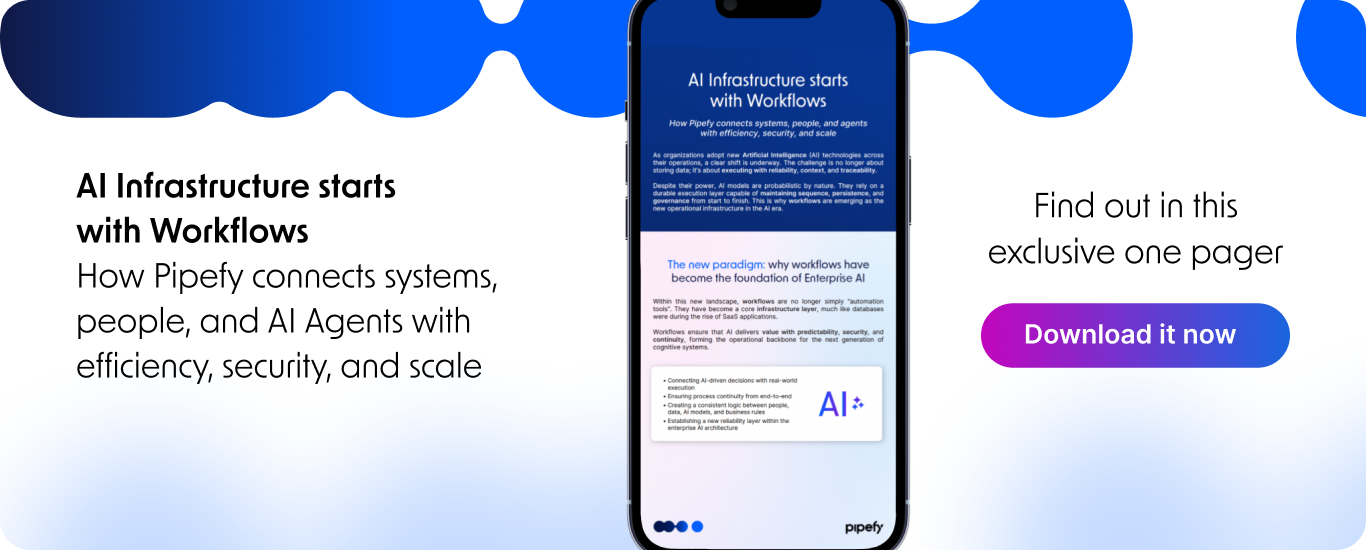
Looking to combine flexibility with intelligent execution? Download our exclusive guide on how to transform your processes with AI Agents and unlock operational agility at scale.

What are the challenges or considerations when pursuing greater flexibility?
While the benefits are clear, flexibility introduces a new level of complexity that must be managed. The main challenges that must be considered regarding cloud flexibility:
- Governance and cost control: Flexible environments require centralized visibility to avoid sprawl and budget overruns.
- Security and compliance: Expanding cloud usage increases exposure to regional data laws and cyber threats.
- Integration with legacy systems: Flexibility should not compromise the reliability of core platforms.
Using no-code/low-code tools such as Pipefy can help strike the balance between operational freedom and risk management.
Pipefy as a flexibility enabler with control
Pipefy is a no-code/low-code platform that enables workflow orchestration in cloud-based environments with agility, security, and autonomy for business teams. By centralizing process automation, rules, and traceability, Pipefy helps companies in regulated industries to:
- Automate audits and approval flows with AI Agents
- Coordinate operations across hybrid or multi-cloud deployments
- Adjust compliance workflows for new markets in days
See how operations leaders automate critical workflows with AI Agents