ARTICLE SUMMARY
Automation is transforming recruitment by eliminating manual tasks and streamlining workflows. This article is a step-by-step guide on how to automate the hiring process in HR departments. From candidate sourcing to interviewing, it’s possible to improve the entire workflow while leveraging AI and low-code tools to gain efficiency, reduce SLAs, and enhance the overall candidate experience.

The pressure on Human Resources (HR) departments has never been higher, as teams face a growing volume of manual tasks that consume time and increase the risk of errors.
For many organizations, the question is no longer if they should modernize, but how to automate the hiring process steps to maintain a competitive edge in a fast-moving talent market.
By replacing fragmented spreadsheets and email threads with a unified workflow orchestration layer powered by AI Agents, HR teams can move from manual execution to outcome-driven operations, delivering results in days, not months.
In this article, you’ll discover the benefits of recruitment automation, which stages of the lifecycle are best suited for technology, and a step-by-step guide to implementation. We will also explore how AI can improve the candidate experience while maintaining high levels of governance and security.
Why should I automate my hiring process?
Relying on manual processes leads to “vendor sprawl,” where teams use too many old-school tools (i.e., spreadsheets, disparate job boards, and isolated emails), resulting in a lack of visibility and high operational costs. Automation addresses these silos by creating a single control plane for all recruitment activities.
Beyond reducing tool sprawl, modern hiring automation also requires a governed execution layer, where workflows, data, people, and AI operate under clear business rules. Without this orchestration, automation initiatives often become isolated experiments instead of scalable operations.
According to research from McKinsey, the adoption of generative AI in business operations could automate up to 70% of repetitive tasks, allowing teams to focus on more strategic initiatives like culture and talent development.
After learning how to automate the hiring process, HR leaders move away from reactive “firefighting” toward a pro-active, data-driven strategy.
What are the benefits of automating recruitment?
Recruitment automation delivers measurable business outcomes when built on standardized, transparent, and auditable workflows. Instead of isolated task automation, HR teams gain full operational visibility and predictable execution across every hiring stage.
The main benefits include:
- Accelerated Time-to-Hire: reducing the hiring cycle from months to days improves the chances of securing top-tier talent.
- Reduced Operational Costs: automation minimizes the need for manual data entry and reduces the cost of errors.
- Built-in Governance and Compliance: every action, decision, and AI interaction is traceable, auditable, and aligned with internal policies and regulatory requirements.
- Improved Productivity: teams can manage a higher volume of candidates without increasing headcount.
| Feature | Manual Hiring | Automated Hiring |
| Data Entry | Manual and error-prone | Automatic and precise |
| Visibility | Fragmented silos | Centralized dashboards |
| SLA Tracking | Difficult to monitor | Real-time alerts |
| Candidate Feedback | Delayed or inconsistent | Standardized and prompt |
Learn more: How to apply AI Agents for internal feedback and employee coaching
Which parts of the hiring process can be automated?
Not every task requires a human touch, and identifying the right stages for an automated hiring system is crucial for success.
The most successful automation strategies focus on structured, repeatable decisions, while keeping humans in control of judgment-heavy moments.
This is where AI Agents operate best: executing tasks autonomously within predefined workflows, business rules, and approval layers.
One of the most effective applications is to automate candidate sourcing, where AI can scan job boards and internal databases to identify qualified profiles based on specific criteria.
Additionally, an automated interview process can handle scheduling, send reminders, and even collect pre-recorded responses for initial screening.
Other areas include:
- Resume Screening: using hiring process automation tools to rank candidates based on skills and experience.
- Background Checks: triggering automatic verifications through integrated third-party services.
- Onboarding: automatically generating contracts and setting up IT access for new hires.

How to automate the hiring process in 5 steps?
To achieve a fast time-to-value, follow this step-by-step guide on how to automate the hiring process in your company:
1. Map your current workflow
Identify the bottlenecks in your existing process, such as slow approval cycles or manual data transfer between systems.
2. Choose the right automation tools
Look for a workflow orchestration platform that combines no-code automation, native AI Agents, and enterprise-grade governance.
The ideal solution allows HR teams to design, automate, and evolve hiring workflows without technical dependency, while ensuring security, compliance, and scalability.
Platforms like Pipefy enable this by connecting systems, people, and AI in a single control layer.
3. Integrate your tech stack
Ensure your automation platform connects seamlessly with your existing ERP, CRM, and payroll systems. This eliminates data fragmentation and ensures a single source of truth.
4. Implement AI Agents
Deploy AI Agents to execute specific tasks across the hiring workflow, such as resume triage, data validation, and candidate communication, operating within predefined business rules, approval flows, and security policies.
These agents act as digital teammates, increasing scale without compromising control.
5. Monitor and optimize
Use real-time dashboards to track KPIs like time-to-hire and cost-per-hire. Continuous monitoring allows you to spot and resolve new bottlenecks as they arise.
Use Case Example
Imagine a large financial services firm struggling with a backlog of 500 applications per week.
In order to learn how to automate the hiring process, by using hiring process automation tools, the firm could implement a system where AI automatically screens resumes against job descriptions.
The team might find that they can reduce their initial screening time by 70%, allowing recruiters to spend more time on qualitative interviews with the best candidates.

Which software tools can be used for automation?
Choosing the right hiring process automation tools is critical for long-term scalability. While traditional Applicant Tracking Systems (ATS) manage the database, they often lack the orchestration capabilities to connect cross-departmental tasks.
Pipefy is a workflow orchestration and automation platform that connects systems, people, and AI to automate and govern HR operations end to end.
Instead of replacing ATS systems, Pipefy sits on top of existing tools, orchestrating hiring workflows with no-code automation, native AI Agents, and real-time visibility, all within a secure and auditable environment.
With Pipefy, organizations can centralize all HR requests (from hiring to vacation) in self-service portals, reducing process SLAs by up to 70% and delivering measurable ROI in less than 6 months.
How does automation improve the candidate experience?
First impressions matter, and a slow, non-responsive hiring process can damage your employer brand. Using technology to streamline the hiring process directly impacts candidate satisfaction by providing:
- Immediate Acknowledgement: candidates receive instant confirmation when they apply.
- Transparency: portals allow candidates to track their status in real-time.
- Efficiency: faster decision-making means candidates aren’t left waiting for weeks for an answer.
What are the common mistakes to avoid when automating the recruitment process?
While the benefits of automating recruitment are significant, common pitfalls can hinder results. Avoid “shadow AI” by ensuring all automation happens within a governed corporate environment.
Additionally, do not attempt to automate 100% of the process; the human element remains vital for assessing cultural fit and final decision-making.
Finally, ensure your automation does not become a silo of its own; it must integrate with the broader company ecosystem.
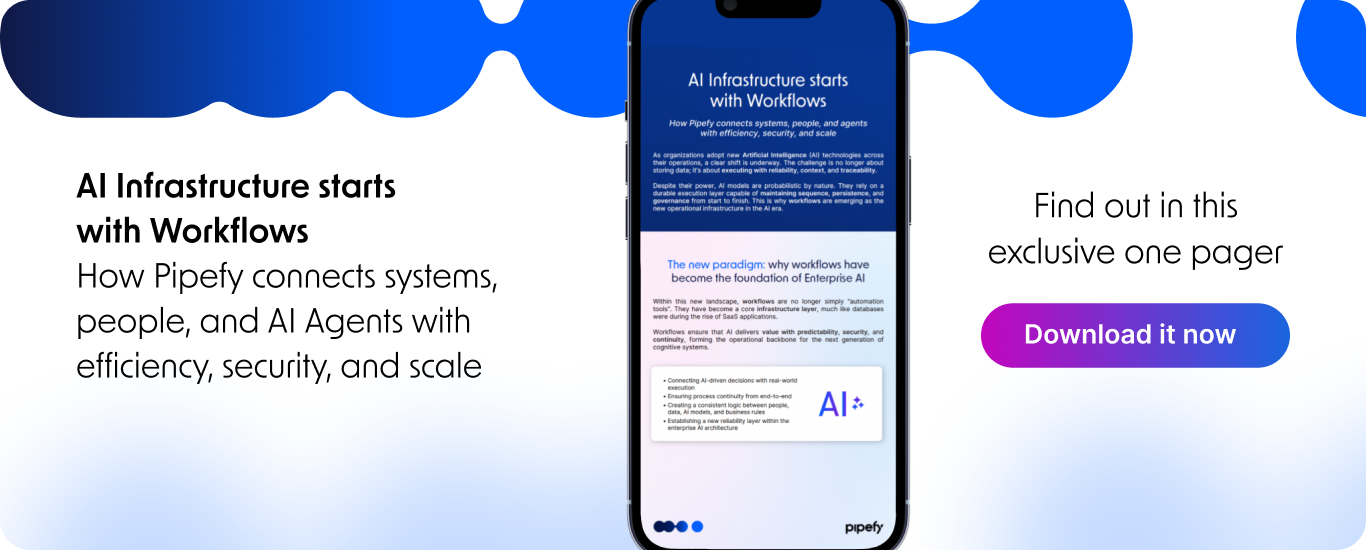
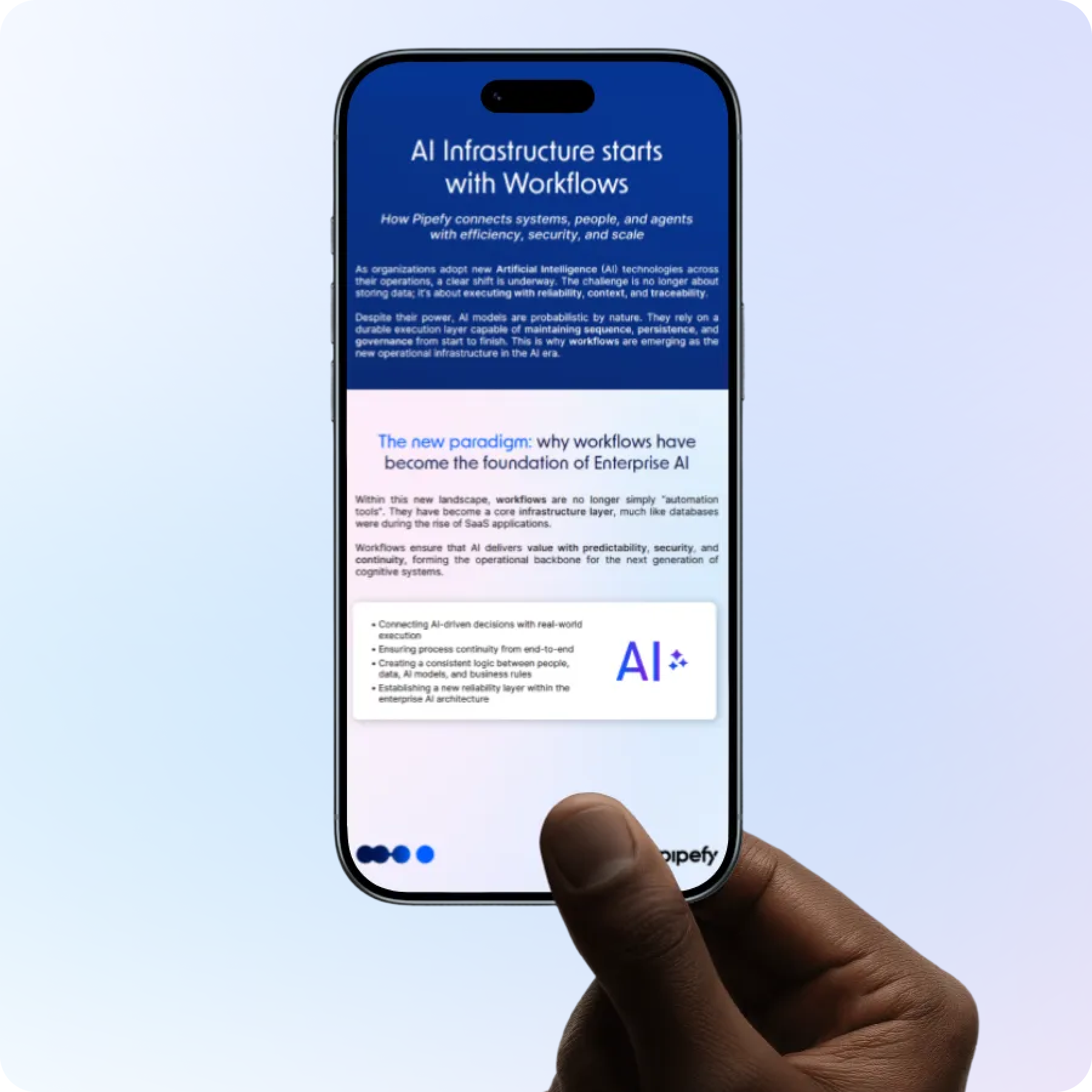
[One Pager] AI Infrastructure starts with Workflows: how Pipefy connects systems, people, and Agentic AI with efficiency, security and scale
Transform your HR operations with Pipefy
Pipefy enables HR teams to move from task execution to outcome-driven operations. With no-code workflows and AI Agents built on structured processes, organizations gain speed, governance, and scalability, without increasing headcount or IT backlog.
By orchestrating hiring, onboarding, and employee services in a single platform, Pipefy ensures every process is transparent, auditable, and designed to deliver measurable business impact.
Book a free demo and see how Pipefy’s AI Agents and workflow orchestration can transform your hiring process: