ARTICLE SUMMARY
Legacy system integration is the work of connecting older, critical systems so they exchange data and run processes together. Done right, it modernizes the enterprise without downtime or a full replacement. This is the checklist I would use, and the evidence I would demand, before signing an integration contract.
By Sobhan Daliry, Chief Product Officer (CPO) at Pipefy
As Pipefy’s Chief Product Officer, I sit in a lot of buying conversations with enterprise IT teams. The pattern is almost always the same. A critical initiative depends on connecting systems that were never meant to talk to each other, the deadline is already set, and the pressure is to buy fast and integrate faster.
That pressure is exactly where the risk lives. My advice to any CIO or head of architecture is to slow down at the decision point, because the wrong call here is expensive to unwind.
The most useful lesson I have learned is that legacy system integration is not about replacing your stack. It is about orchestrating on top of it. What follows is a buyer’s checklist for doing that without downtime, and the proof points I would ask any vendor to put on the table.
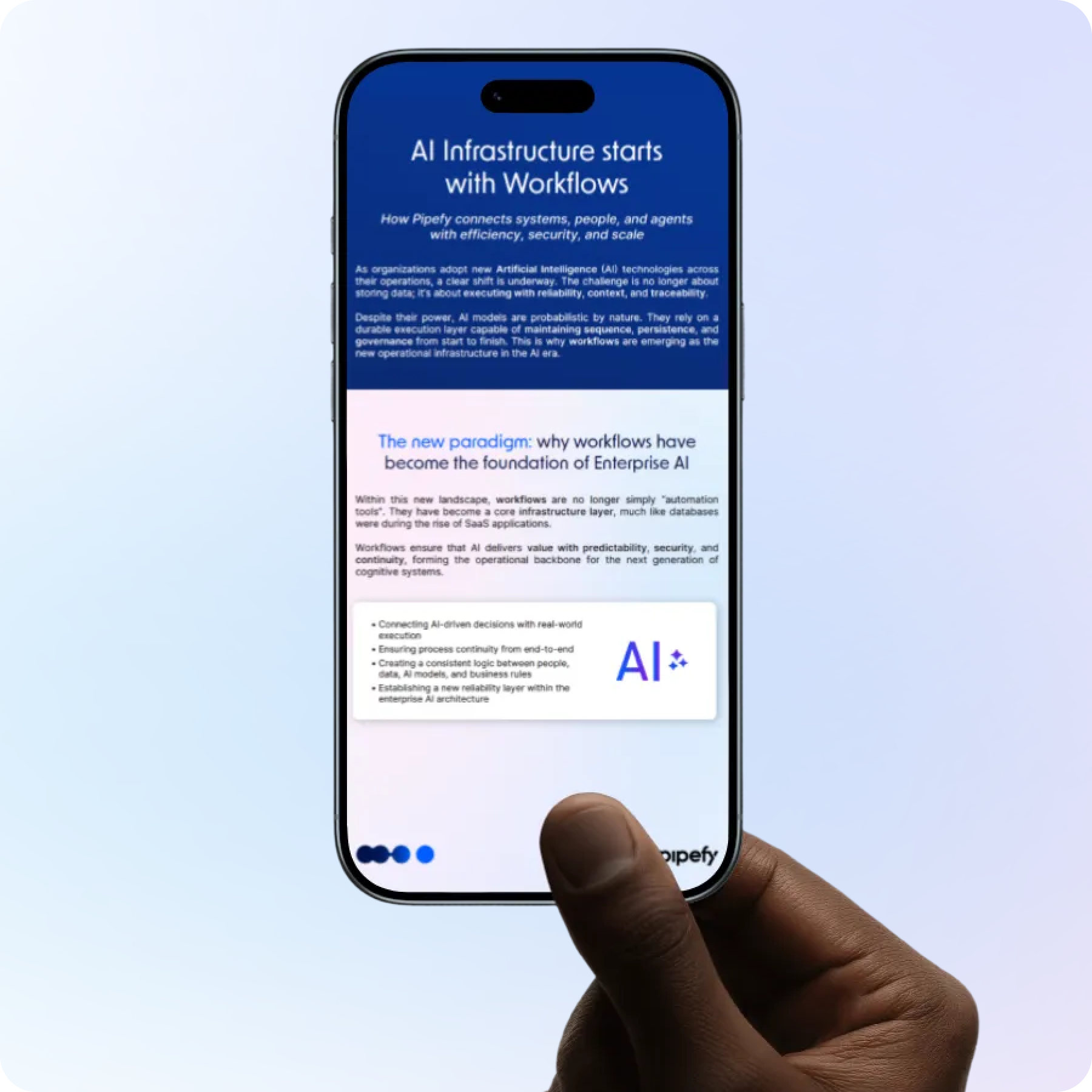
[One-Pager] AI Infrastructure starts with Workflows: How Pipefy connects systems, people, and AI Agents with efficiency, security, and scale
Why legacy system integration projects usually fail
In my experience, these projects rarely fail on the technology. They fail on the approach. Teams buy a tool to move data between two systems, then discover the real work lives in the handoffs, approvals, and exceptions between a dozen of them.
The market data reflects the same gap. Gartner predicts that more than 40% of agentic AI projects will be canceled by the end of 2027, citing escalating costs, unclear business value, and inadequate risk controls. Integration projects die for the same reasons: no governed way to run the process across systems, and no clear return.
There is a second failure mode I see constantly. When integration is slow or brittle, business teams stop waiting and wire up their own tools, which is how shadow IT risk spreads across the enterprise.
The fix is not another point-to-point connector, but treating integration as part of a broader IT modernization strategy built on orchestration.
5 questions to ask any vendor before you buy
Before anything, I would put five questions to the vendor and expect concrete answers, not slideware.
- Does it orchestrate on top of our systems of record, or does it ask us to replace them? The right answer extends the life of your stack.
- What happens to uptime during and after integration? A migration-free approach should mean no downtime for the core systems that run the business.
- Is governance built into the process, with an immutable audit trail, access control, and human-in-the-loop, or is it bolted on afterward?
- How many systems connect out of the box, and is there any model or vendor lock-in? Look for a broad connector library and the freedom to bring your own model.
- How fast is the first integration live, and what is the proven ROI? Time-to-value and audited numbers separate a platform from a promise.
If a vendor cannot answer these clearly, that is the answer.

What zero downtime actually looks like in practice
Zero downtime is not a marketing claim, it is an architecture choice. It happens when the integration layer sits over your systems of record as a system of engagement, reads from and writes to them through APIs and connectors, and runs the process across them without moving or freezing any core data.
In practice, that means you never take the business offline to modernize. You connect one process, prove it, and expand, while the underlying systems keep running exactly as they did. I have watched a global chemical manufacturer start with a single department and scale to more than 20, running dozens of active processes on the same platform, without a disruptive cutover.
Speed matters here too. When integration is orchestration rather than migration, the first critical process typically goes live in about 14 days, not quarters.

- Read more: For a closer look at how that connective layer works, see Pipefy’s Integration Hub.
How Pipefy connects legacy systems without replacing them
This is the model we built Pipefy around. As a business orchestration and automation platform, it acts as a system of engagement over your ERP, CRM, and core systems, connecting to them through APIs, native iPaaS, and 600+ pre-built connectors. The process runs end to end in one governed flow, with an immutable audit trail, and AI Agents execute steps inside that flow rather than off to the side.
The distinction I care most about is governance. Control lives in the process, not in each agent or connector, which is what keeps integration auditable as it scales.
It is a point my colleague André Kano, Business Unit Manager at Pipefy, makes well:
Rather than proposing one more standalone AI Agent to the market, Pipefy proposes that the process is the unit of value: when agents are implemented and orchestrated inside well-defined, deterministic processes, they deliver better results. They stay consistent in what they execute, they govern which data they can and cannot consume, and they turn that data into an output that creates value for the company.
André Kano
Business Unit Manager at Pipefy
The results follow the model. An agribusiness cooperative reached a 157% ROI after moving a core process onto the platform, cutting its cycle from 25 days to 8. This is not automation for its own sake, it is orchestration that pays back.
Puma’s success story: orchestrating dozens of processes on one platform
Puma, the global sporting goods brand, is a clear example of connecting work across an organization without replacing the systems underneath. Its people team was drowning in manual steps that could not keep pace with continuous hiring.
Instead of a rip-and-replace, Puma orchestrated its processes on Pipefy, layering AI document reading on top of existing systems. It now runs over 29 active processes across more than 10 departments, accelerated onboarding for around 50 new hires a month, and executed more than 10,000 automated actions in a single year.
Today, practically all of our processes are automated, such as hiring, vacations, terminations, and the request portal for Corporate and Retail. This gave us visibility into the volume of requests we handled monthly and annually. In the hiring process alone, using AI for document reading, we estimate a gain of around 10 hours per month.
Wanderson Andrade
Project Lead at Puma
Final evaluation checklist
When you get to the decision, this is the short list I would score every vendor against:
- Orchestrates on top of your systems of record, with no rip-and-replace.
- Delivers zero downtime for core systems during and after integration.
- Builds governance into the process: audit trail, access control, and human-in-the-loop.
- Connects broadly out of the box, with no model or vendor lock-in.
- Proves fast time-to-value and audited ROI, not just a demo.
On that last point, Forrester’s Total Economic Impact™ study of Pipefy found a 260% ROI with payback in under 6 months. If a platform clears this checklist, the fastest way to confirm it is to see it run on your own stack, so book a demo with your real systems in the room.
Orchestrate on top of your stack, with governance
The enterprises that modernize well are not the ones that replace the most. They are the ones that connect what they already run and govern it as a single flow. That is the whole idea behind legacy system integration done without downtime.
To go deeper, the one-pager AI Infrastructure starts with Workflows: How Pipefy connects systems, people, and AI Agents with efficiency, security, and scale lays out the full picture.
Inside, you will find:
- Why workflows are becoming the core infrastructure layer of the AI era, much as databases were during the rise of SaaS.
- How to orchestrate systems, people, and AI Agents in a single governed flow, on top of the tools you already run.
- The governance built in for enterprise scale: immutable logs, granular access controls, SSO, MFA, and audit trails.
- Multi-LLM flexibility to choose the best model for each use case, with full security and no lock-in.
- The business impact to expect, from up to 40% faster execution of complex processes to end-to-end visibility.
[One-Pager] AI Infrastructure starts with Workflows: How Pipefy connects systems, people, and AI Agents with efficiency, security, and scale